This is why liberals are called weak and spineless. A pack of white people out on the curb in the middle of DC's drinking district crying. Over a dog. Give me a break. Normally I can see the point of such things, but this is beyond the pale. Pure melodrama.
I notice there was no vigil for this. Or this. But you'll cry over a dog. Post-racial America indeed.
You want to cry over something milquetoast liberals? How bout this?
Thursday, September 16, 2010

For Parrot

Outside my window, half a block south, I can see candles flickering in the semi-darkness of the sidewalk. A small crowd stands in vigil. The occasional car honks in passing. There's a news van parked at the end of the block: a local television station has come to cover the event. All of this for Parrot. If you live in DC, you probably already know who that is.
Parrot was a pit bull who was shot and killed by a police officer last Sunday. There are conflicting accounts, but a few facts are agreed upon by the dog's owner, the MPD, and eyewitnesses. First, it happened in full view of a street festival that was in full swing in DC's Adams Morgan neighborhood. Second, Parrot and a poodle got into a sidewalk altercation -- both were leashed; the poodle may or may not have been bitten. Third, an MPD officer stepped in and subdued Parrot, before shooting the animal execution-style.
The crowd currently gathered in front of the Brass Knob, where Parrot was killed five days ago, and the presence of local media are a testament to how much this story has impacted locals, especially dog owners. I was shocked and sickened when I heard the news on Sunday. It didn't help that I own a dog that looks strikingly similar to Parrot, and that I live hundreds of feet from where it all happened.
A friend of mine knows the officer who shot the dog. Apparently, he is a dog lover (and owner) himself. Imagining the officer as a faceless cop, he's a monster who cares little for human rights (like property) and even less for animals. After hearing he may be a dog lover, he sounds like a human being who made a really, really bad snap decision.
To a certain extent I can understand. The officer was faced with a dog, a pit bull no less, who could have very well been dangerous, in the midst of a densely attended street festival. Allegedly, the owner's hand was bleeding. Maybe things looked worse than they were, and the officer did what he thought he had to do. Of course, this doesn't exonerate him. Disregarding the callousness of his public execution, he discharged his weapon in the midst of a densely attended street festival. At least Parrot was on a leash.
One good thing may come of this. The great public outcry, the disgust and anger that swelled with the news of Parrot's death, will, I hope, cause an officer to think twice before shooting a dog in the future, especially when no one is in immediate danger. Still, that's little salve for Parrot's owner.
I walked past the vigil on my way home earlier, before it got started. The crowd was solemn; a few eyes were red from crying. A woman handed me a leaflet with pictures of Parrot on it. Another handed me a dixie cup, to catch candle wax. And there stood Parrot's owner, wearing a white t-shirt, surrounded by strangers who were brought here on a rainy Thursday night to honor the life of a dog. Just somebody's pet. I still don't know if the feeling I had at that moment was profound hope, or sadness.
(Mirrored on Cultural Minefield.)
Android and the Myth of Openness
I realize I never did any sort of formal intro to my first post as I was a bit tipsy when I posted it, I figure I should do one now so y'all have an idea of things you're likely to see showing up under my name. As a tech professional for going on 2 decades now (god I'm old) you're likely to see commentary from me on various and sundry topics in the tech quarter, as well as voluble arguments with Admiral X as I wend my way through my neverending love-hate relationship with Steve Jobs. I'm also something of a theatre queen (understatement, I know) so interesting Broadway tidbits as well as my own reviews of the shows I've seen both in NYC and locally will be appearing. I'll try to eschew politics, though I can't guarantee it, as you'll see below.
Let's look at Android. It's open, it's free, it's extensible, it's upgradeable YAY! But, oh wait, my carrier or my manufacturer has put a skin on it so you can't upgrade when the new version comes out without breaking the UI you know and/or love. And my carrier changed and locked the default search provider. And they downplayed the open market in favor of their own closed markets. Oh no, looks like we've got a couple more Selfish Giants on the prowl. Regardless of which one wins, the average user is the loser. This is why I think it is high time for the FCC to step in and change the rules of the cellular marketplace. They need to:
“My own garden is my own garden,” said the Giant; “anyone can understand that, and I will allow nobody to play in it but myself.” So he built a high wall all around it, and put up a notice-board.One of the main selling points of Android devices is that Google Android is an open platform compared to the walled garden owned by the Selfish Giant, I mean, Steve Jobs. A number of recent articles in the tech blogosphere (yes, I hate myself a little bit for using that term) have started to call into question this myth.TRESPASSERSHe was a very selfish Giant.
WILL BE
PROSECUTED
- Verizon is About to Kick Google in the Apps...
- Android is as Open as the Closed Fist I'd Like to Punch the Carriers With
- ...When Greedy Carriers Ruin Decent Phones
- The “Verizon iPhone” Versus “The iPhone On Verizon’s Network”
Let's look at Android. It's open, it's free, it's extensible, it's upgradeable YAY! But, oh wait, my carrier or my manufacturer has put a skin on it so you can't upgrade when the new version comes out without breaking the UI you know and/or love. And my carrier changed and locked the default search provider. And they downplayed the open market in favor of their own closed markets. Oh no, looks like we've got a couple more Selfish Giants on the prowl. Regardless of which one wins, the average user is the loser. This is why I think it is high time for the FCC to step in and change the rules of the cellular marketplace. They need to:
- Ban carrier phone subsidies.
- Ban carrier software bundling.
- Ban hardware crippling.
Has Anyone Ever Told You That You Look Like John Legend?
So, this past Saturday, I posed this question to a fellow 100MC:
If you were to hook up with someone that looked strikingly similar to a celebrity musician, would you play that musicians music in the background while you hooked up?
Now, this is assuming that you would hook up with someone more along this line:


If you were to hook up with someone that looked strikingly similar to a celebrity musician, would you play that musicians music in the background while you hooked up?
Now, this is assuming that you would hook up with someone more along this line:


And not someone along this line:


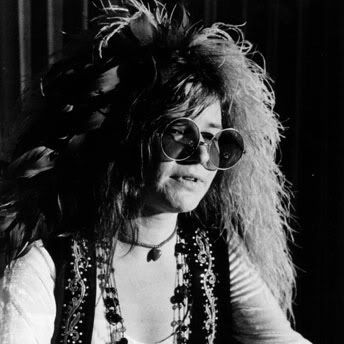
Besides the unattractive quality I can't imagine getting it on to "I Would Do Anything For Love," "Sailing," or "Me & Bobby McGee." (I am highly aware that it is rude to call the dead ugly...but *shrug*)
So, that all being said... I would love to hear your opinions and/or hilarities in regards to celebrity look-a-like sex. I would go as far as to say that if I were to hook up with someone that looked like Matt Damon, I would consider having Saving Private Ryan playing in the background, for my own amusement.
Wednesday, September 15, 2010
Adrian Fenty's Spectacular Defeat

Was it Michelle Rhee? Fenty's aloofness toward the black community? His hubris with regard to his reelection campaign? The heavy whiff of nepotism that accompanied his appointments?
Megan McArdle thinks gentrification was largely to blame for Fenty's loss:
When it became clear that Fenty was going to lose, there was a lot of shock going around in the circles I live and work in--which is to say, mostly white professionals who live in DC's gentrified, or gentrifying, precincts. After all, there's little question that things have gotten much better under Fenty, and not just for white people. The truly abysmal schools are being reformed, parks are being built, crime is slowly improving, the city is getting streetcars desired by almost everyone except the folks who live directly on the tracks . . . so why did voters just kick him out?She continues:
I don't think you can quite explain it by saying that Fenty's modestly corrupt (too-expensive contracts have gone to friends, though those friends seem to have mostly done the work very well). Marion Barry has remained quite popular here through much more serious violations, and in general, the corruption now pales in comparison to the pervasive corruption that has been uncovered in multiple city agencies, which long predates Fenty's administration.
Most people agree that this is ultimately a proxy battle over gentrification. It's all rather nebulous, because of course Vincent Gray hasn't campaigned on rolling back gentrification. He seems to support all the services Fenty has expanded, with the possible exception of the school reforms. Instead, the theme of his campaign--and the more generalized opposition to Fenty--has centered around respect and process.
Gentrification represents a real loss to people who can't afford to stay. They've lived in the city a long time; they have networks of friends and relatives, and institutions like churches, that are built around proximity. Why should they favor a city that provides more services--and then sees real estate prices spike, so that they can't afford to stay around to enjoy them? There are probably a number of voters for whom the status quo is vastly preferable to a situation where Fenty manages to improve the schools enough that middle class voters start a bidding war for homes in the district.The implications of her argument, if correct, are provocative. It only follows that a segment of D.C. believed things have been getting better, yet actively voted against progress. In fact, a recent poll showed that most Washingtonians thought the district was heading in the right direction. The same poll showed Fenty trailing behind Gray.
Certainly for the teachers and the taxi drivers--both groups huge opponents of Fenty--this is about real economic loss and changes to their jobs that make them less pleasant.
But no one comes right out and talks about the fact that they are now worse off; instead they talk about how Fenty has run roughshod over council process, or that he hasn't respected some group . . the teachers, the council members, "the community". So our mayoral election has become a debate over which groups in the city are worthy of respect, rather than what concrete improvements can be made in peoples' lives. Because in a city dysfunctional, there are no changes that make everyone better off.
I don't know whether the voters who selected Vincent Gray understand at some level that as long as the quality of life in the city continues to improve, gentrification will continue apace. Vincent Gray didn't force them to consciously make that choice; he made vague promises about things like inclusionary zoning which are supposed to keep more affordable housing in the district. These initiatives will not work, but at least they sound hopeful. And the people who voted for Gray are willing to hope because they think that he, unlike Fenty, respects their concerns.
I think McArdle's argument is persuasive, but Fenty's bafflingly inept reelection campaign certainly played a large part in his loss. The Washington Post's surprisingly good analysis, published today, is the best argument for this view.
But I think McArdle nails it with her prediction of what to expect from Mayor Gray:
I don't know how good a mayor Gray will be--he seems like a nice guy, but nice guys often have a hard time getting things done in fractious cities, and his campaign platform is pretty empty of actual proposals. I think this is probably a tragedy for the utterly dysfunctional school system, but I doubt that Gray is going to do much to roll back the other changes, like the change in the taxi fare system, that have made the city a better place.Progress marches onward? Washingtonians can only hope.
And for good or ill, I doubt he'll do anything about gentrification. Inclusionary zoning has, as far as I know, proven an excellent way to subsidize home building in poor neighborhoods, and to provide below-market housing for relatively middle class retirees, but it has not, as far as I am aware, ever succeeded in keeping a neighborhood's economic mix from changing. The forces altering DC right now are like a runaway freight train. In 2000, the population of DC was 30% white and 60% black; by 2006-2008, those numbers were 36% and 54%, respectively. Meanwhile, the percentage living below the poverty level dropped from over 20% to under 18%. On a demographic timescale, that is lightning fast. If gentrification keeps up at that pace, the lines are going to cross sometime in the next 10 to 15 years.
Vincent Gray could throw his body in front of the freight train and it wouldn't even slow down. The change in the city may stop on its own; no trend continues forever. But the city is now good enough that many affluent people who used to flee to the suburbs now want to live here--and their presence is attracting non-government services which make it attractive enough to lure still other people to follow them. Unless Gray starts an active campaign to make things worse, the core issue that seems to have animated this campaign is largely out of his hands.
(Mirrored on Cultural Minefield.)
Tuesday, September 14, 2010
A Matter of Choice
This is a repost from my blog The Knowledgemonger Kronicles from about a year and a half ago, but thought that it would benefit being recast on 100MC.
Anyone who knows me knows a few central facts:
I believe that happiness is a choice we make.
I believe that love is something to give freely.
I believe that trust is huge.
And I believe that a good cup of coffee can cure many of life's issues.
But, in this segment I am hoping to tackle one of those points and maybe touch on the others.
One of my least favorite phrases that I hear people say is: "[This] makes me unhappy," closely followed by "[This] makes me happy." I think of these people as the same people who believe that luck plays a central role in their life. I don't know about you but, I don't flip a coin or role a die EVERY time that I need to make a decision. Nor do I wait for things to unfold to start my actions (granted this some times get me in to unanticipated trouble, but that is another post entirely).
If something truly made you happy, wouldn't you always be happy? You would find the stimulus that caused your involuntary happiness and harness it. No need for puppies, flowers, a song, a smile, a hug, a kiss, a laugh, or affection. All you would need is bottled "Happy" & I don't mean: Happy. The Clinique people would love if that was the case & honestly, I think that may be easier.
Happiness is so hard for some because it is a choice. Well, partly. Research has shown that happiness is 50% genetic, About 10% to 15% is a result of various measurable variables, such as socioeconomic status, marital status, health, income, and others. The remaining 40% results from actions that individuals deliberately engage in for the purpose of becoming happier. However, these actions may vary between persons (www.wikipedia.com). So, some people are predisposed to being less happy than others. But, at that same time, they also have a choice in increasing their happiness based on the control they have from actions in which they "deliberately engage."
Leo Tolstoy said: "If you want to be happy. Be." This has been a main component of my life and my life choices for the last decade or so. I stumbled across this quote on a day back then that I just needed to see that and as I am prone to do, I thought about it. I said, "Lonnie (because that is what I call myself), why are you unhappy?" And I put together a list of things that were "making" me unhappy and realized that all them came down to choice. Examples:
Your boyfriend cheats on you. Do you choose to be unhappy & stay with said boyfriend? Or do you choose to cut your loses, realize that this person is toxic to your life and move on to better happiness?
You are greatly in debt. Do you choose to be unhappy, cry about the unfairness of Capitalism & hope that something will miraculously change to make this situation better. Or do you choose to change your spending habits, take on an additional job, and set goals to eliminate the debt and be more happy.
Notice that the subject of both examples are derived from choices that have already been made. You decided what person to date & you decided on what to spend your money and how much. You make tons of decisions everyday and to say that something that happened effects you in anyway without taking ownership of those feelings is not fair. Not fair to you and not fair to who or what you assign the blame.
Is being happy easy? No, it takes work. It takes recognition of how your react to situations. It takes courage to get rid of things that are causing you to react unhappily. It takes trust in your friends to not bring you situations that are not ones that you want. But, overall, it takes a decision making and analysis of your emotions.
Think about it sometime when you are unhappy. Think about what is at the root of your unhappiness. Is it something that you can: 1) Eliminate, 2) Get over, 3) Unnecessary or 4) None of the above. Yes, there are circumstances that are not pleasant that happen to us all that we cannot eliminate or get over and are quite necessary. These are the times that we must focus on the necessity and there you will find something to be happy about. If you are suffering for a purpose, typically that pursuit will be for something that ultimately yields something that is positive.
Okay, now I am starting to get distracted, damn coffee shops. :-p But, remember, your life is under your control and happiness is a choice.
Anyone who knows me knows a few central facts:
I believe that happiness is a choice we make.
I believe that love is something to give freely.
I believe that trust is huge.
And I believe that a good cup of coffee can cure many of life's issues.
But, in this segment I am hoping to tackle one of those points and maybe touch on the others.
Happiness: A Matter of Choice
One of my least favorite phrases that I hear people say is: "[This] makes me unhappy," closely followed by "[This] makes me happy." I think of these people as the same people who believe that luck plays a central role in their life. I don't know about you but, I don't flip a coin or role a die EVERY time that I need to make a decision. Nor do I wait for things to unfold to start my actions (granted this some times get me in to unanticipated trouble, but that is another post entirely).
If something truly made you happy, wouldn't you always be happy? You would find the stimulus that caused your involuntary happiness and harness it. No need for puppies, flowers, a song, a smile, a hug, a kiss, a laugh, or affection. All you would need is bottled "Happy" & I don't mean: Happy. The Clinique people would love if that was the case & honestly, I think that may be easier.
Happiness is so hard for some because it is a choice. Well, partly. Research has shown that happiness is 50% genetic, About 10% to 15% is a result of various measurable variables, such as socioeconomic status, marital status, health, income, and others. The remaining 40% results from actions that individuals deliberately engage in for the purpose of becoming happier. However, these actions may vary between persons (www.wikipedia.com). So, some people are predisposed to being less happy than others. But, at that same time, they also have a choice in increasing their happiness based on the control they have from actions in which they "deliberately engage."
Leo Tolstoy said: "If you want to be happy. Be." This has been a main component of my life and my life choices for the last decade or so. I stumbled across this quote on a day back then that I just needed to see that and as I am prone to do, I thought about it. I said, "Lonnie (because that is what I call myself), why are you unhappy?" And I put together a list of things that were "making" me unhappy and realized that all them came down to choice. Examples:
Your boyfriend cheats on you. Do you choose to be unhappy & stay with said boyfriend? Or do you choose to cut your loses, realize that this person is toxic to your life and move on to better happiness?
You are greatly in debt. Do you choose to be unhappy, cry about the unfairness of Capitalism & hope that something will miraculously change to make this situation better. Or do you choose to change your spending habits, take on an additional job, and set goals to eliminate the debt and be more happy.
Notice that the subject of both examples are derived from choices that have already been made. You decided what person to date & you decided on what to spend your money and how much. You make tons of decisions everyday and to say that something that happened effects you in anyway without taking ownership of those feelings is not fair. Not fair to you and not fair to who or what you assign the blame.
Is being happy easy? No, it takes work. It takes recognition of how your react to situations. It takes courage to get rid of things that are causing you to react unhappily. It takes trust in your friends to not bring you situations that are not ones that you want. But, overall, it takes a decision making and analysis of your emotions.
Think about it sometime when you are unhappy. Think about what is at the root of your unhappiness. Is it something that you can: 1) Eliminate, 2) Get over, 3) Unnecessary or 4) None of the above. Yes, there are circumstances that are not pleasant that happen to us all that we cannot eliminate or get over and are quite necessary. These are the times that we must focus on the necessity and there you will find something to be happy about. If you are suffering for a purpose, typically that pursuit will be for something that ultimately yields something that is positive.
Okay, now I am starting to get distracted, damn coffee shops. :-p But, remember, your life is under your control and happiness is a choice.
Subscribe to:
Posts (Atom)